

select the right adhesive for flexible PCBs
The adhesives used in PCBs can have a huge impact on the overall performance of the board. They can be utilized for a range of purposes, from bonding coverlays to the substrate to adhering stiffeners that rigidize the circuit. Choosing the right adhesive for your project requires careful consideration. The type of adhesive you choose should be based on your specific use case and the environment in which your board will operate.
For example, if your flexible pcb will be exposed to harsh environments, the adhesive should have good mechanical stress resistance. It should also have low ion content to prevent signal interference and be able to withstand high temperatures. Liquid epoxy and acrylic adhesives are commonly used in flexible circuit assemblies. Both of these materials are available in both one- and two-part versions and provide excellent bonding strength. However, they may degrade during soldering operations, so careful control of the temperature is necessary.
Polyimide (PI) is another common adhesive for flexible circuits, as it has high heat resistance and chemical stability. PI is typically supplied as a flexible tape that can be applied to the substrate or overlay with light pressure and heat. It is important to note that PI requires a special process and equipment to cure correctly.
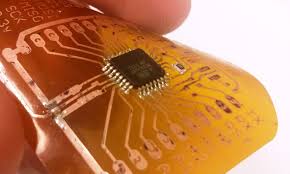
How do you select the right adhesive for flexible PCBs?
If you’re looking for an adhesive with exceptional flexibility, you can also consider using UV-curable glues. These adhesives cure instantly when exposed to ultraviolet light and are highly versatile. They are ideal for use in harsh environments where the board is subjected to extreme flexing and vibrations. They are also easy to rework and will not migrate to the copper pads or solder holes.
There are a number of other types of adhesives that can be used for flexible circuit assembly. These include phenolic, polyethene naphtha late (PEN), and polyetherimide (PEI). While these aren’t as versatile as PSA, they still offer many advantages over other adhesives. They are typically more cost-effective than FR4, and they can be applied in the same way as a PSA.
Adding stiffeners to your flex PCB can help to increase its durability. Stiffeners can be made from a variety of materials, including aluminum and stainless steel. The main benefit of stiffeners is that they can prevent the circuit from bending. In addition, they can also improve the circuit’s heat dissipation capability.
Stiffeners can be attached to a flex PCB by using either PSA or lamination under heat and pressure. PSA is usually the preferred method, as it allows the stiffeners to be positioned precisely where they are needed. However, the disadvantage of PSA is that it can degrade during soldering operations, which can lead to an insufficient connection between the rigid and flex sections of the board. To avoid this, manufacturers can use a special thermoplastic adhesive, such as FEP or PEI, instead. These adhesives can be applied with a lower temperature, making them more compatible with the flex-to-rigid joins in your circuit.