

Electric Circuit Board Function
A circuit board is a flat piece of material that holds and connects electronic components using conductive pathways, enabling them to communicate with each other and perform complex functions. The functioning of a circuit board depends on the quality of the components and the physical properties of the board material and the traces. The board material, typically a type of fibreglass known as FR4, provides a durable and rigid substrate that supports the various components and traces. The traces, which are copper coated, provide the conductive pathways that allow electrical signals to pass between components. The design of traces is a key factor in determining a circuit board’s functionality. They must be designed to minimize their length and avoid crossing paths, which can cause interference and signal loss.
The design of a circuit board starts with the creation of a schematic diagram, which is a symbolic representation of the layout of the components and their connections. This allows the designer to test the functionality of the circuit before committing to its physical layout. The layout process is usually done with computer-aided design (CAD) software, which lets the designer place and route the components and traces in a virtual environment. The CAD software also provides checks to ensure the layout meets certain design rules, such as minimizing the number of crossing paths.
Once the electric circuit board layout is finalized, it can be manufactured. This involves etching the layout onto a copper-clad board and drilling holes for the component leads. Then, the plated through-holes and vias are filled with copper by electroplating, and the surface of the board is covered with a solder mask to protect the conductive pathways from corrosion during assembly. The plated through-holes and vias form the interconnecting structures that allow different layers of the circuit board to be connected.
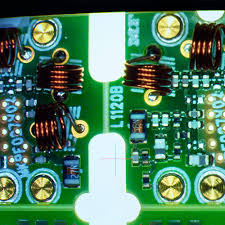
How Does an Electric Circuit Board Function?
Another essential part of a circuit board is the capacitor, which is used to store energy. A capacitor is composed of an insulating material between two conductive plates, and it can block the flow of direct current but enable the flow of alternating or time-varying current. The insulating material is important to the function of the capacitor, as it determines how much current it can carry.
Other crucial components of a circuit board include resistors, which are used to limit the flow of electric current. They are often color-coded with stripes to identify their resistance and tolerance levels, and they have their resistance values in ohms printed on them.
Once the circuit board is assembled, it must be rigorously inspected to ensure that all components have been installed correctly and that there are no solder bridges or other defects. This can be done manually or with an automatic optical inspection (AOI) machine. Finally, the board must be energized and thoroughly tested to ensure that it functions properly. A common industrial method for testing a circuit board is called the flying probe test, which uses a series of automated tests to verify that all circuits are functioning as intended.


